
- Regular Price
- $19.99
- Sale Price
- $19.99
- Regular Price
- $19.99
Sold Out
- Unit Price
- per

If you’ve ever worn a shirt all day only to find red marks, itchiness, or irritation by nightfall, you’re not alone. For many people, sensitive skin isn’t just about occasional discomfort — it’s a daily challenge that influences what they wear, how they choose fabrics, and how they care for their clothing.
While skincare and detergents often get the spotlight, one of the most impactful factors in daily skin comfort is fabric choice. Some materials gently glide against the skin, while others trap heat, rub, or even irritate due to chemical finishes.
In this article, we explore the best fabrics for sensitive skin, how they work, and why they outperform common alternatives. We’ll also share tips for choosing clothes that feel good from the first wear to the hundredth.
Sensitive skin reacts more easily to external triggers — from weather changes to chemical exposure — and can present symptoms like:
Redness
Itching
Dryness
Rash or inflammation
Persistent discomfort
Skin professionals describe sensitive skin as a phenotype rather than a condition, meaning it’s a pattern of reactions rather than a single diagnosis. One frequent trigger? Contact with fabric fibers and the chemicals used in textile processing.
This underscores the importance of fabric choice — especially if your clothing touches your skin for long periods.

Before we talk about what’s best, let’s look at what often causes problems:
Polyester, nylon, acrylic, and other synthetics are durable and inexpensive but can:
Trap heat and moisture
Prevent airflow
Increase friction against skin
These conditions may worsen irritation, especially during long wear or physical activity.
Wrinkle-resistant or stain-repellent finishes often involve chemical treatments that can leave residues on fabric, increasing the risk of skin reactions.
Some wools or hemp fabrics are naturally coarse and can feel scratchy against bare skin — especially where friction is higher, such as underarms and shoulders.
The best fabrics rarely have to be “treated” to perform well. Instead, they tend to share these qualities:
✔ Breathability and airflow
✔ Natural fiber composition
✔ Moisture-wicking properties
✔ Smooth surface that minimizes friction
✔ Minimal chemical processing
Now let’s explore the fabrics that tick these boxes.
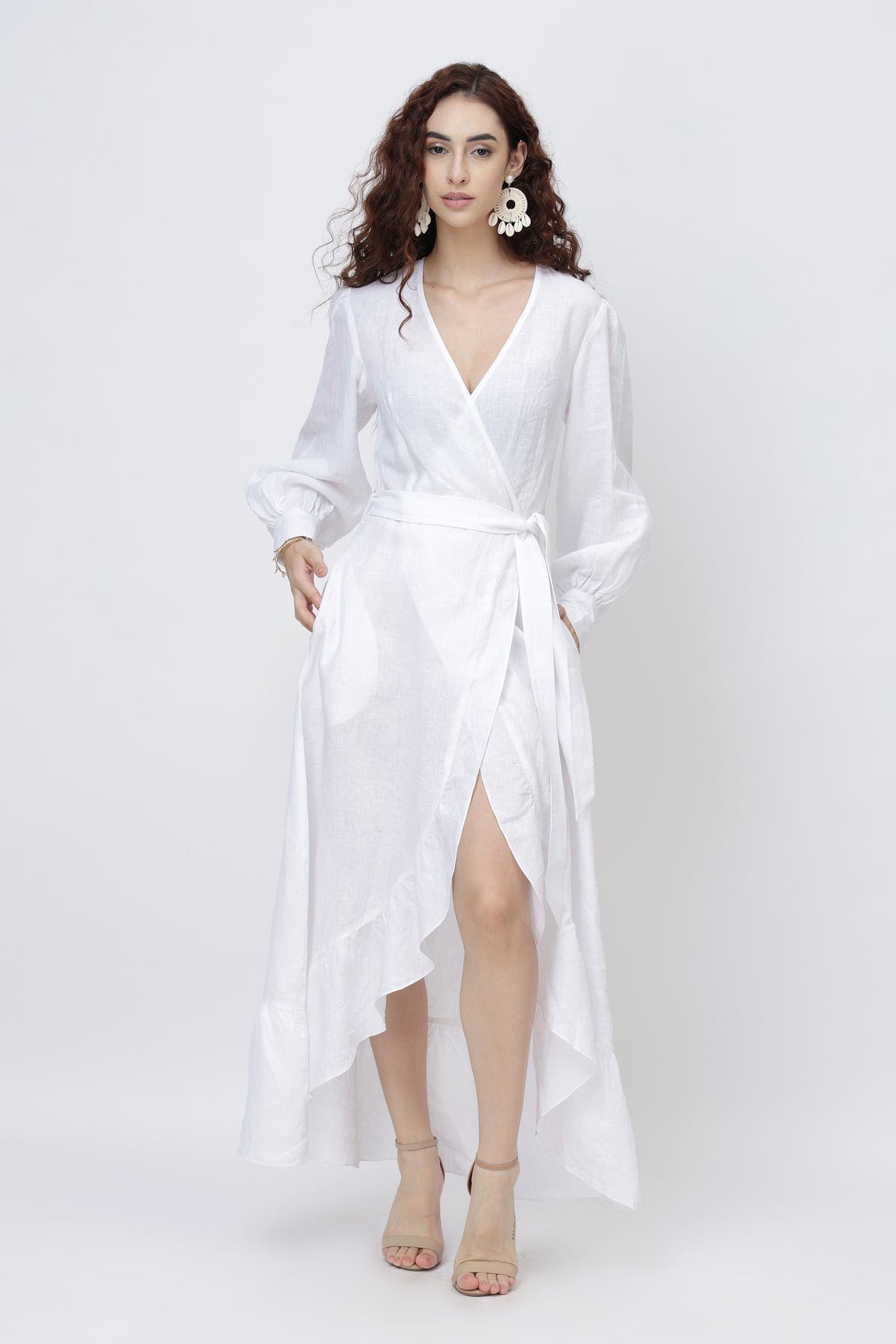
Linen is excellent choice for sensitive skin — especially in warmer weather.
Made from flax fibers, linen allows air to circulate freely
Strong yet lightweight, so it doesn’t cling or trap heat
Naturally moisture-wicking and cool to the touch
Linen’s structure keeps skin comfortable throughout the day and makes it particularly suited for breathable summer dresses and relaxed daily wear.

Organic cotton is widely regarded as one of the safest and most comfortable fabrics for sensitive skin.
Grown without synthetic pesticides or fertilizers, reducing chemical residue on fibers
Naturally breathable, allowing airflow that prevents heat and sweat buildup
Unlike conventional cotton, which may carry traces of pesticides or require chemical finishes, organic cotton is often processed with standards that prioritize skin safety.

Silk is prized for its smooth surface and gentle feel, making it one of the least irritating fabrics for sensitive skin.
Extremely smooth texture minimizes friction
Natural protein fiber that tends to be hypoallergenic
Balances temperature — cool when it’s warm, cozy in cooler weather
Silk works beautifully in nightwear or blouses, especially for those with very reactive skin.
Discover more about silk fibers on Wikipedia.
Plant-derived fabrics like bamboo viscose and modal combine softness and breathability with a luxurious feel.
Exceptionally soft hand feel
Good moisture absorption
Natural breathability
Reduced static cling
Bamboo can have natural antibacterial properties, making it especially helpful in humid conditions or for people prone to sweating.
Wool sometimes gets a bad reputation for sensitive skin — but that’s usually due to coarse or untreated varieties.
Merino wool — very fine fibers, soft to the touch, and far less prickly than regular wool
Cashmere or pashmina blends — lightweight, smooth, and known for their gentle feel
Fine alpaca wool — naturally soft and often smoother than traditional sheep wool
These wools are best when worn as layers over a softer base layer (e.g., organic cotton tee) rather than directly touching highly sensitive areas.
For more on wool and its types, see Wikipedia.

It’s not just about what the fiber is — but how it’s made.
A very dense, tight weave can feel heavier and less breathable. Loose weaves (like linen or knit cotton) allow more airflow and reduce friction.
Lightweight fabrics are generally more comfortable next to the skin
Heavy fabrics can trap heat and moisture
When choosing clothing for sensitive skin, always consider not just fiber type but weave style and weight.
Even the gentlest fabrics can become irritating if they’re not cared for properly. Here are essential care tips:
Use cold or lukewarm water
Choose mild, fragrance-free detergents
Avoid fabric softeners and harsh bleaches
Air dry when possible
Avoid high tumble-dry heat, which can break down fibers
Fold delicate garments instead of hanging them (to avoid stretching)
Use breathable storage bags instead of plastic coverings

If you’re updating your wardrobe for comfort and sensitive skin, prioritize:
Natural fibers over synthetics
Loose, breathable fits over tight clothing
Certified fabrics that confirm low chemical processing
Layering pieces that allow temperature control
This approach not only helps sensitive skin but also makes your wardrobe more versatile and comfortable year-round.
Natural fiber alone doesn’t guarantee comfort. How the fabric is finished and processed matters, too.
✔ No heavy chemical treatments
✔ OEKO-TEX® Standard 100 certified fabrics
✔ Clear, transparent sourcing information
✔ Minimal synthetic blends
When you see certification labels on clothing tags, you can be more confident the material is genuinely gentle on skin.
For many people with sensitive skin, choosing the right fabrics isn’t a luxury — it’s a necessity.
A fabric that traps heat or contains chemical residues can trigger:
Itching and breakouts
Skin inflammation
Discomfort throughout the day
Even disrupted sleep
Switching to gentle fabrics like organic cotton or linen can make a noticeable difference — often with just one wardrobe change.
Let’s recap the top fabrics that consistently work well for sensitive skin:
Choosing materials that respect both your skin and your lifestyle means investing in comfort that lasts.
Natural, untreated fabrics like organic cotton and linen are typically the most reliable choices.
Yes — silk’s smooth texture minimizes friction and irritation.
Not always. Conventional cotton may contain chemical residues. Organic cotton is much gentler due to lower chemical processing.
If possible, yes — especially in garments worn close to the skin. Natural fibers generally outperform synthetics in breathability and comfort.
Absolutely. Certifications like GOTS and OEKO-TEX® help ensure fabrics are processed with minimal harmful chemicals.






0 comments